
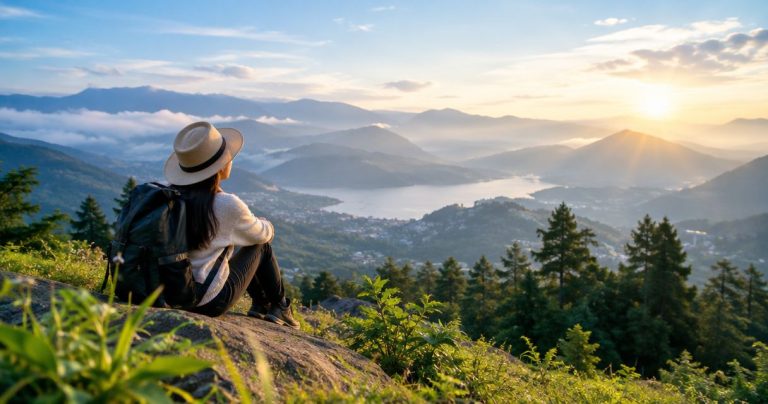
Best overall: Shimla. Best for mountain outings: Manali. Best for tea-country scenery: Munnar. The best hill stations in India for a 2026 summer escape depend on your arrival city, road tolerance and preferred activities; this guide compares six destinations for travellers from New Zealand.
- Shimla leads the best hill stations in India for a first visit with sightseeing and mountain scenery.
- Choose Manali for outdoor excursions, Munnar for tea landscapes, and Ooty for heritage railway interest.
- Darjeeling suits tea and Himalayan views; Gangtok suits monastery visits and an eastern Himalayan itinerary.
- Mann Travel Nz compares and books NZ–India flights; choose your hill destination before settling your arrival city.
Why this matters
India's summer overlaps with New Zealand's cooler months, but a hill holiday still needs careful timing. Higher elevation does not guarantee cold afternoons, clear mountain views or dry roads. Conditions also change between the Himalayan foothills and the Western Ghats.
Your international flight is only part of the journey. A hill station that looks convenient on a map can involve a winding transfer after arrival. Mann Travel Nz offers flight and hotel booking services; plan your Indian gateway and hill transfer together rather than treating them as separate trips.
What makes the best hill stations in India?
Use these criteria to decide which destination deserves your time:
- Summer comfort: Consider elevation, shade and the activities you expect to do, not just a cool-looking photograph.
- Arrival logistics: Compare the complete journey from your Indian arrival airport, including the final road or rail connection.
- Distinctive activities: Choose a destination with something you genuinely want to do beyond escaping warm weather.
- Walking demands: Check slopes, steps and vehicle access when travelling with children or older relatives.
- Weather flexibility: Keep alternatives for rain, cloud and disrupted outdoor plans.
Best hill stations at a glance
| Rank and destination | Best for | Standout feature | Key limitation |
|---|---|---|---|
| 1. Shimla | First-time hill holidays | Heritage streets and established sightseeing | Steep walking and busy central areas |
| 2. Manali | Outdoor-focused trips | Valley excursions and mountain scenery | Road conditions shape the itinerary |
| 3. Munnar | Tea-country scenery | Tea-covered slopes in Kerala | Attractions are spread out |
| 4. Ooty | Heritage railway interest | Nilgiri Mountain Railway | Railway plans need advance coordination |
| 5. Darjeeling | Tea culture and Himalayan views | Tea estates and distinctive hill-town character | Cloud can obscure mountain views |
| 6. Gangtok | Monasteries and regional excursions | A base for exploring Sikkim | Permits depend on nationality and destination |
1. Shimla: best hill station for a first visit
Shimla is the strongest default for a first Indian hill holiday because you can build the trip around the town itself. Heritage buildings, the Ridge and the Mall give you a clear sightseeing focus without making every day a separate excursion.
At about 2,200 metres above sea level, Shimla offers an elevated setting, but pack for changing conditions rather than assuming every day will feel cold. For a 2026 itinerary, distinguish a centrally located hotel from one that simply has a Shimla address.
Shimla pros:
- Town-based sightseeing gives the holiday a straightforward structure.
- Heritage streets offer an alternative to outdoor excursions.
- The Kalka–Shimla railway adds a distinct travel experience.
Shimla cons:
- Slopes and pedestrian areas complicate luggage handling.
- Busy central streets do not suit travellers seeking isolation.
Best for: First-time visitors who want sightseeing close to their accommodation.
Verdict: Buy a Shimla-based itinerary for a straightforward introduction to India's hill towns.
2. Manali: best hill station for outdoor excursions
Manali suits travellers who want their holiday to extend beyond the town centre. The surrounding Kullu Valley supports an itinerary built around scenery, walks and excursions rather than a checklist of urban attractions.
Choose Manali for its surroundings, not just its name. Separate gentle valley activities from higher-altitude outings when planning your 2026 trip. They involve different road conditions, physical demands and access requirements.
Manali pros:
- Valley scenery supports an outdoor-focused holiday.
- Excursions let you vary the pace between days.
- Different neighbourhoods offer alternatives to staying in the busiest centre.
Manali cons:
- Driving and traffic affect how much you fit into a day.
- Higher mountain outings depend on weather and access conditions.
Best for: Travellers who want active days and accept a road-dependent itinerary.
Verdict: Buy a Manali trip for valley exploration; skip it if winding transfers are a deal-breaker.
3. Munnar: best hill station for tea-country scenery
Munnar is the clearest choice if tea-covered slopes are the main reason you want a hill holiday. Its landscape gives the trip a different character from the Himalayan destinations on this list.
Build your days around a limited area rather than crossing between distant viewpoints. A property overlooking tea country and a property near the town centre serve different priorities, so check the location against your intended outings.
Munnar pros:
- Tea landscapes give the destination a clear identity.
- Scenic outings work well with a slower itinerary.
- The location fits a broader Kerala journey.
Munnar cons:
- Dispersed attractions increase reliance on road transport.
- Rain and cloud change the quality of viewpoint visits.
Best for: Couples and slower-paced travellers who prioritise landscapes over a busy town centre.
Verdict: Buy a Munnar stay for tea-country scenery, with room to rearrange outdoor plans.
4. Ooty: best hill station for heritage railway interest
Ooty combines a Nilgiri hill-town stay with gardens, lake outings and the Nilgiri Mountain Railway. Choose it when the railway is part of the holiday's purpose, not merely another activity to squeeze between transfers.
Ooty sits at about 2,240 metres above sea level. That elevation makes layers sensible, but your accommodation's position still matters: a scenic hillside address can involve more driving than a central stay.
Ooty pros:
- The heritage railway adds an activity beyond viewpoints.
- Gardens suit travellers who prefer structured sightseeing.
- The Nilgiri setting works within a southern India itinerary.
Ooty cons:
- Railway arrangements need to fit the wider travel schedule.
- Road transfers involve bends and require realistic timing.
Best for: Travellers who enjoy heritage transport and garden-based sightseeing.
Verdict: Buy an Ooty itinerary when the railway and Nilgiri setting match your interests.
5. Darjeeling: best hill station for tea and Himalayan views
Darjeeling combines tea culture, hillside streets and the prospect of views towards Kangchenjunga. It rewards travellers interested in the town's character even when distant mountains remain behind cloud.
At about 2,040 metres above sea level, Darjeeling demands more thought about walking routes than its compact map suggests. Treat a clear mountain panorama as a bonus, not the condition on which your holiday succeeds.
Darjeeling pros:
- Tea experiences give the itinerary a strong local focus.
- The Darjeeling Himalayan Railway adds heritage interest.
- Town exploration provides an alternative to viewpoint excursions.
Darjeeling cons:
- Cloud can obscure the views you travelled to see.
- Steep streets require care when choosing accommodation.
Best for: Travellers who value tea culture and hill-town atmosphere alongside mountain scenery.
Verdict: Buy a Darjeeling stay for the whole destination, not a guaranteed sunrise photograph.
6. Gangtok: best hill station for monastery visits
Gangtok suits travellers who want a Sikkim-based holiday with monastery visits and regional excursions. Its appeal lies in combining time in the city with carefully selected outings rather than treating every attraction as equally accessible.
For a 2026 visit, check entry and restricted-area requirements against your passport and exact route. Requirements differ between Indian nationals and foreign nationals, and permission for one part of Sikkim does not establish access to every excursion.
Gangtok pros:
- Monastery visits give the itinerary a cultural focus.
- The city provides a base for regional exploration.
- Town time and excursions offer different daily rhythms.
Gangtok cons:
- Permit requirements add planning work for foreign visitors.
- Mountain-road journeys limit how much fits comfortably into a day.
Best for: Travellers prepared to plan documents and transfers around a Sikkim itinerary.
Verdict: Buy a Gangtok-based trip after checking the requirements for your intended route.
How to turn the shortlist into a workable trip
A good destination choice survives the logistics check. Before booking, work through this sequence:
- Choose your gateway: Match your Indian arrival city to the wider trip, including family visits.
- Check transfers: Establish the onward transport, luggage arrangements and final hotel access.
- Match activities: Confirm that the destination's main attractions suit everyone travelling.
- Keep flexibility: Leave room to rearrange weather-sensitive outings without losing the holiday's purpose.

Do not book a remote hotel before checking the transfer. Ask whether the vehicle reaches reception, whether steps separate the road from the entrance, and how you will reach meals and planned activities. These questions matter more than a broad destination label.
Connectivity and documents deserve their own check
Mountain travel makes offline preparation sensible. Save your accommodation address, transport details and essential documents before setting out; do not make access to a booking confirmation depend entirely on a mobile connection.
When comparing eSIM plans by network coverage, assess the underlying network against your hill destination rather than judging only the data allowance. Check device compatibility separately, and keep offline copies of the information you need for arrival.
For travellers using New Zealand passports, check India's current entry requirements and any destination-specific permissions before departure. Gangtok and planned excursions elsewhere in Sikkim need particular attention. A flight booking and permission to enter a country are separate matters.
How the destinations rank
This ranking prioritises a clear holiday purpose, manageable planning and alternatives when outdoor conditions change. Shimla leads because its town-based sightseeing creates a straightforward first visit; the other destinations win narrower use cases rather than competing to be identical substitutes.
Mann Travel Nz's best hill stations in India shortlist should start with your wider journey. If you are visiting relatives as well as taking a holiday, compare the detour and transfer burden before deciding which landscape you prefer.
Which hill station should you choose?
Choose Shimla if you remain undecided. It gives a first-time visitor a clear sightseeing base without requiring every day to revolve around a distant excursion.
Pick Manali for outdoor days, Munnar for tea scenery, Ooty for heritage railway interest, Darjeeling for tea culture and mountain-view opportunities, or Gangtok for a monastery-focused Sikkim visit. Choose one destination with a workable transfer rather than combining hill towns simply because they appear on the same list.
FAQ
What’s the best hill station in India for a first visit?
Shimla is the strongest default for a first hill-station visit. Its heritage streets and town-based sightseeing give the trip a clear structure, although steep walking and hotel access still need checking.
Is Manali better than Shimla for a summer holiday?
Manali is better for outdoor-focused valley excursions; Shimla is better for a town-based sightseeing holiday. Choose according to your activities and tolerance for road travel rather than expecting either destination to suit everyone.
Which is better for tea scenery, Munnar or Darjeeling?
Choose Munnar when tea-covered landscapes are the main priority, and Darjeeling when you want tea culture alongside Himalayan-view opportunities. Neither destination guarantees clear conditions for every scenic outing.
Are Indian hill stations always cold in summer?
No, Indian hill stations are not always cold in summer. Elevation, sunshine, rainfall and local conditions affect comfort, so check the forecast close to departure and pack layers.
Which hill station suits a heritage railway holiday?
Ooty suits travellers who want the Nilgiri Mountain Railway to be a central part of the trip. Shimla and Darjeeling also have heritage railway connections, so match the railway journey to your wider route.
Do New Zealand travellers need permits for Gangtok?
Foreign nationals need to check Sikkim entry permissions and any additional restrictions for their planned excursions. Confirm current requirements for your passport and exact itinerary before booking the affected travel.
Can Mann Travel Nz help with a hill-station holiday?
Mann Travel Nz offers flight and hotel booking services, including flights between New Zealand and Indian cities. Discuss your arrival city and intended hill destination together so the international journey fits the wider itinerary.
One last thing
For your 2026 trip, ask the hotel one practical question: Can the transfer vehicle reach the entrance with your luggage? A central address does not answer that. Steps, pedestrian streets and hillside access can determine whether arrival feels manageable, especially after an international journey.
Related guides
- Best family holiday destinations in India for Kiwi travellers
- Best honeymoon destinations in India for Kiwi couples
- Best solo travel destinations in India for Kiwi explorers

