
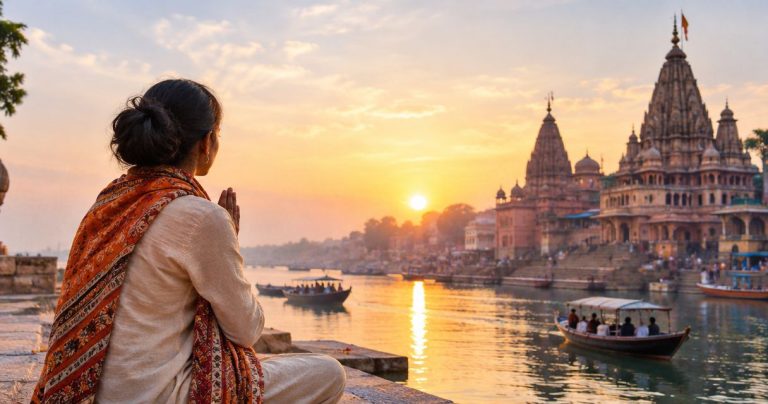
Best overall: Varanasi. Best for Buddhist pilgrimage: Bodh Gaya. Best for shared worship and community meals: Amritsar. These are the best pilgrimage destinations in India for different spiritual interests; this 2026 guide compares six places by religious significance, visitor expectations and practical travel demands.
- Varanasi leads the best pilgrimage destinations in India for travellers seeking Hindu ritual beside the Ganges.
- Choose Bodh Gaya for Buddhist pilgrimage, Amritsar for Sikh worship, and Rishikesh for yoga-focused travel.
- Madurai suits Tamil temple heritage; Tirupati suits a focused pilgrimage to Venkateswara Temple.
- Mann Travel NZ books India flights for New Zealand travellers; plan onward pilgrimage transport separately.
Why this matters
A pilgrimage itinerary works best when it follows your purpose, not a checklist of famous names. Watching public worship, attending a temple visit and joining a meditation programme involve different expectations. Choose the experience first, then choose the route.
For travellers departing New Zealand, Mann Travel NZ offers flight and hotel booking services. Your international arrival city is only part of the journey: check onward transport, accommodation location and religious-site access before committing to the full itinerary.
A 2026 pilgrimage plan also needs room for ordinary travel realities. Queues, security checks, walking conditions and fixed religious observances can shape the day more than the distance on a map.
What makes the best pilgrimage destinations in India?
These criteria separate a meaningful visit from an itinerary built around photographs:
- Religious purpose: Match the destination to the tradition or practice you want to understand or participate in.
- Visitor access: Check whether you can enter the relevant spaces and whether advance arrangements apply.
- Physical demands: Consider steps, uneven surfaces, barefoot areas, heat and time spent standing.
- Travel fit: Choose a destination that works with your arrival city and onward journey.
- Daily experience: Decide whether you want active public worship, quiet contemplation or structured practice.
- Local conduct: Understand clothing, photography, footwear and behaviour requirements before arriving.
For 2026, treat official site instructions as the final authority on access. A destination's religious significance does not tell you whether a particular visitor can enter every part of it.
Pilgrimage destinations at a glance
| Destination | Best for | Standout experience | Key limitation |
|---|---|---|---|
| Varanasi | Hindu ritual and riverfront worship | Ganges ghats and Kashi Vishwanath Temple | Busy riverfront areas and demanding walking conditions |
| Amritsar | Sikh worship and community participation | Golden Temple and langar | Head covering, footwear and respectful conduct requirements |
| Bodh Gaya | Buddhist pilgrimage and contemplation | Mahabodhi Temple and the Bodhi tree tradition | Quiet worship requires a different pace from sightseeing |
| Rishikesh | Yoga-focused spiritual travel | Ashrams and Ganges-side practice | Programme content differs between providers |
| Madurai | Tamil temple architecture and living worship | Meenakshi Amman Temple | Visitor access differs across temple spaces |
| Tirupati and Tirumala | A focused Venkateswara pilgrimage | Tirumala temple on the seven hills | Darshan arrangements need advance attention |
1. Varanasi: best pilgrimage destination for Hindu river rituals
Varanasi is the strongest default choice if you want to encounter Hindu pilgrimage through both a sacred city and its daily rituals. The Ganges ghats bring bathing, prayer and ceremonial activity into public view, while Kashi Vishwanath Temple gives the visit a specific devotional focus.
Kashi Vishwanath is recognised among the 12 Jyotirlinga shrines associated with Shiva. That significance is distinct from the riverfront experience: a temple visit and time beside the Ganges serve different purposes, so plan for both rather than treating either as a substitute.
Varanasi pros:
- Combines an important Shiva pilgrimage site with riverfront worship.
- Gives you several ways to observe religious life without a tightly scheduled programme.
- Supports a visit centred on one city rather than several distant stops.
Varanasi cons:
- Steps, narrow lanes and crowded areas complicate access for some travellers.
- Cremation areas require discretion and are not appropriate subjects for casual photography.
Best for: Travellers seeking a first encounter with Hindu pilgrimage in a living sacred city.
Choose accommodation with the actual walking approach in mind, not just its distance from the river. Ask where vehicles stop and what remains on foot, especially when travelling with older relatives.
Verdict: Choose Varanasi for Hindu ritual; skip a rushed stop built only around an evening ceremony.
2. Amritsar: best pilgrimage destination for Sikh worship
Amritsar centres on the Golden Temple, also known as Sri Harmandir Sahib. Its setting, devotional music and langar—the communal meal served through Sikh traditions of service—make participation and conduct central to the visit.
The Golden Temple welcomes visitors from different religious backgrounds. You still enter a place of worship, not an unrestricted sightseeing attraction: cover your head, remove footwear and follow the site's instructions.
Amritsar pros:
- Offers a clear introduction to Sikh worship and seva, or selfless service.
- Connects the temple visit with the communal practice of langar.
- Gives your itinerary a clear central destination rather than a dispersed circuit.
Amritsar cons:
- Queues and busy periods require patience.
- Visitors must observe site rules throughout the complex, including restrictions on tobacco and alcohol.
Best for: Travellers interested in Sikh faith, community meals and respectful participation.
Leave enough time to sit and listen rather than moving directly from the entrance to the exit. If you want to volunteer, ask about the appropriate task and follow the directions given; participation is service, not an activity arranged for photographs.
Verdict: Choose Amritsar for community-centred worship; skip treating langar as a dining attraction.
3. Bodh Gaya: best pilgrimage destination for Buddhist contemplation
Bodh Gaya is associated with the Buddha's enlightenment and centres on the Mahabodhi Temple complex. It is the clearest choice here when the purpose of your journey is Buddhist pilgrimage rather than a general introduction to Indian religious life.
The UNESCO-listed Mahabodhi Temple Complex provides the main focus. Monasteries connected with different Buddhist traditions add context, but a meaningful visit does not require collecting stops across the town.
Bodh Gaya pros:
- Has a direct connection to a defining event in Buddhist tradition.
- Supports an itinerary built around contemplation rather than constant movement.
- Introduces different Buddhist architectural and devotional traditions.
Bodh Gaya cons:
- Visitors looking for a busy sightseeing schedule need a different pace.
- Meditation instruction and organised programmes require separate checks; arriving does not enrol you in a course.
Best for: Buddhist pilgrims and travellers seeking time for quiet reflection.
For a 2026 visit, distinguish access to a sacred site from access to teaching. If instruction matters to you, confirm the programme language, participation expectations and registration arrangements before building flights around it.
Verdict: Choose Bodh Gaya for Buddhist pilgrimage; skip assuming every monastery offers visitor classes.
4. Rishikesh: best pilgrimage destination for yoga-focused travel
Rishikesh suits travellers whose spiritual purpose involves practice: yoga, meditation or time in an ashram setting. The Ganges and the town's religious associations provide context, but the programme you choose determines much of the experience.
An ashram stay, a drop-in class and a teacher-training course are different commitments. Read the daily schedule and participation rules rather than choosing from a photograph or the word yoga alone.
Rishikesh pros:
- Combines a recognised spiritual setting with opportunities for organised practice.
- Lets you centre the visit on a routine rather than sightseeing alone.
- Offers a different emphasis from temple-focused pilgrimage cities.
Rishikesh cons:
- Teaching approach, accommodation conditions and programme content vary.
- A commercial yoga offering is not automatically the same as a traditional ashram experience.
Best for: Travellers who want yoga or meditation to structure their stay.
Ask what a normal day involves, whether sessions are compulsory and what experience level the teaching assumes. If you want quiet contemplation, check the immediate surroundings as carefully as the programme description.
Verdict: Choose Rishikesh for a defined practice programme; skip booking on destination reputation alone.
5. Madurai: best pilgrimage destination for Tamil temple heritage
Madurai's Meenakshi Amman Temple combines active worship with Dravidian temple architecture. Dedicated to Meenakshi and Sundareswarar, the complex is known for its 14 gopurams, or gateway towers.
The architecture is a reason to visit, but the temple remains a functioning religious space. Access to inner areas is restricted, so non-Hindu visitors should establish which parts they can enter before planning the visit around a particular shrine.
Madurai pros:
- Connects architectural interest with living Tamil Hindu worship.
- Gives travellers a clear temple focus within a major Tamil Nadu city.
- Suits an itinerary already centred on southern India.
Madurai cons:
- Visitor access is not identical across the complex.
- Device restrictions, footwear rules and security checks affect how you prepare.
Best for: Travellers interested in Tamil religious heritage and temple architecture.
If Chennai is your arrival point, compare the onward journey before committing to an overland transfer. Travelling by road is a substantial part of the itinerary, not a short connection; assessing taxis from Chennai to Madurai means checking the pickup point, luggage space, planned breaks and final drop-off location together.
For a 2026 trip, confirm current temple access instructions separately from your transport booking. A driver or accommodation reservation does not establish permission to enter restricted religious spaces.
Verdict: Choose Madurai for Tamil temple heritage; skip assuming every shrine is open to every visitor.
6. Tirupati and Tirumala: best for a focused Venkateswara pilgrimage
Tirupati and Tirumala belong together in planning, but they are not interchangeable locations. The Venkateswara Temple stands at Tirumala, associated with 7 hills, while Tirupati serves as an important base for the pilgrimage.
This is the most purpose-specific choice in the list. Choose it when darshan at the temple is the reason for travelling, not simply because the destination fits between other sightseeing stops.
Tirupati and Tirumala pros:
- Provide a clearly defined devotional objective.
- Suit travellers building their journey around Venkateswara worship.
- Allow the rest of the itinerary to follow the pilgrimage arrangements.
Tirupati and Tirumala cons:
- Darshan categories, registration requirements and entry arrangements need careful checking.
- Queuing, standing and the journey between locations require physical planning.
Best for: Devotees making a deliberate pilgrimage to Venkateswara Temple.
Confirm the relevant arrangements through Tirumala Tirupati Devasthanams before attaching fixed onward travel. Read identification and clothing instructions for your chosen visit, and explain the physical demands to everyone in your group.
Verdict: Choose Tirumala for a planned devotional visit; skip treating darshan as an unplanned stopover.
How we ranked these pilgrimage destinations
This ranking prioritises a clear religious purpose, a distinct visitor experience and practical itinerary fit. It does not rank the importance of faiths or claim that one sacred site matters more than another.
Varanasi leads as the default for Hindu riverfront ritual, while the other destinations serve different purposes. For 2026 planning, your tradition, mobility and intended participation should override the list order.
Turn your choice into a workable itinerary
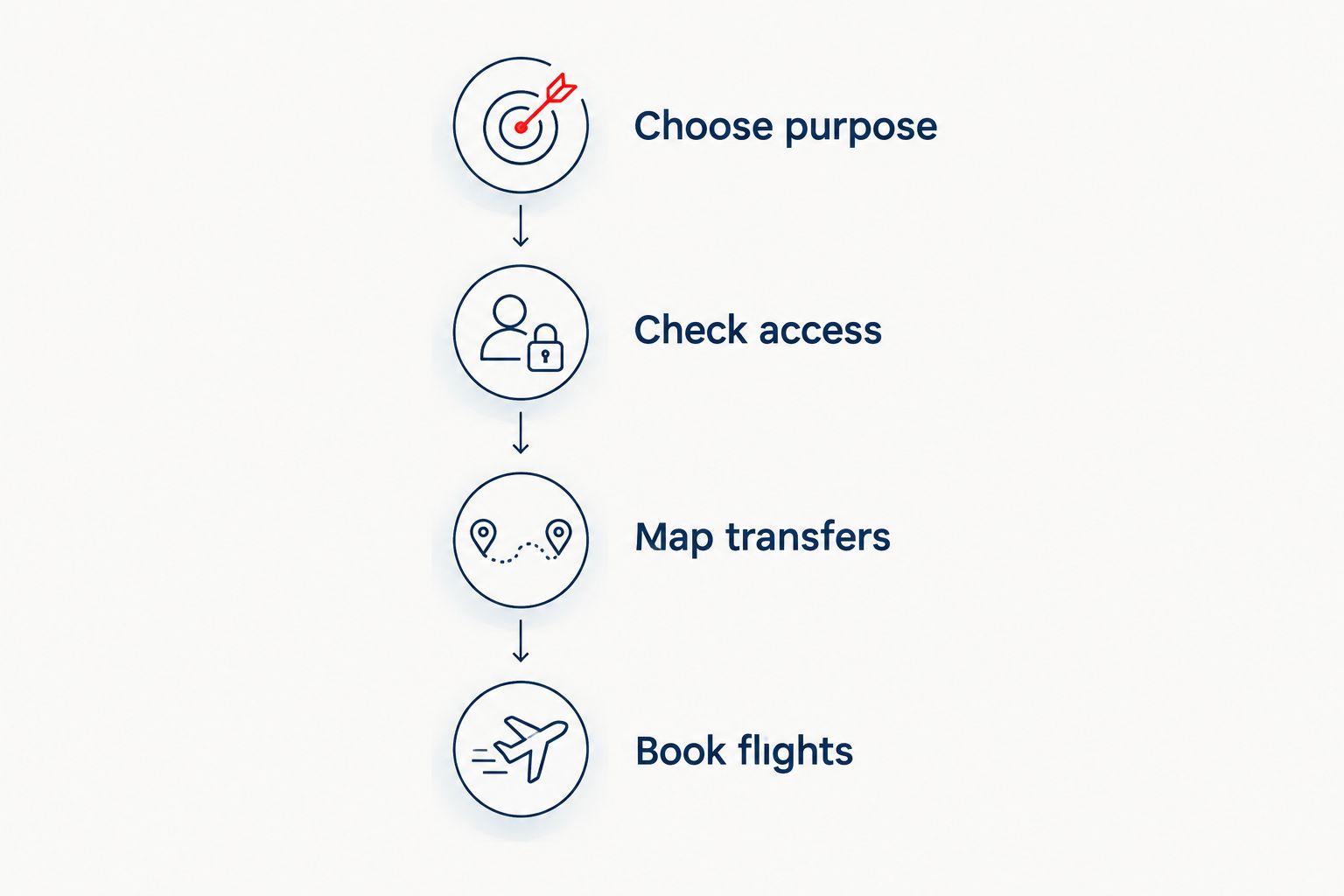
Keep the planning sequence simple. Resolve the religious visit before filling the surrounding days:
- Choose purpose: Decide whether worship, contemplation, architecture or structured practice leads the trip.
- Check access: Confirm entry conditions, identification, clothing and any registration requirements.
- Map transfers: Establish arrival points, onward transport and the final approach to accommodation.
- Book flights: Match international travel to the pilgrimage arrangements rather than the reverse.
Give each traveller a clear picture of the day: walking surfaces, footwear changes, queues and opportunities to rest. Mann Travel NZ handles flight and hotel bookings; keep religious entry arrangements explicit when organising the wider journey.
Which pilgrimage destination should you choose?
Choose Varanasi if you want a first Hindu pilgrimage destination and have no stronger tradition-specific preference. Choose Amritsar for Sikh worship, Bodh Gaya for Buddhist pilgrimage, Rishikesh for organised practice, Madurai for Tamil temple heritage, or Tirumala for Venkateswara darshan.
Mann Travel NZ suits New Zealand travellers booking flights to India before continuing to a pilgrimage destination. Start with the place that matches your purpose, then build a route your travelling group can manage.
FAQ
What’s the best pilgrimage destination in India for a first visit?
Varanasi is the default choice in this guide for a first visit focused on Hindu pilgrimage. Its Ganges ghats and Kashi Vishwanath Temple combine riverfront ritual with a major Shiva shrine; choose another destination when your religious purpose is more specific.
Is Amritsar or Varanasi better for a spiritual trip?
Amritsar is better for Sikh worship and community participation, while Varanasi is better for Hindu riverfront ritual. Choose by the tradition and experience you want rather than treating the cities as equivalent attractions.
Can non-Sikhs visit the Golden Temple?
Yes, the Golden Temple welcomes visitors from different religious backgrounds. Cover your head, remove footwear and follow the site’s conduct instructions throughout your visit.
Where should I go in India for Buddhist pilgrimage?
Choose Bodh Gaya for a pilgrimage centred on the Buddha’s enlightenment. The Mahabodhi Temple complex is the main focus; confirm meditation teaching or organised programmes separately.
Can non-Hindus enter every part of Meenakshi Amman Temple?
No, access is restricted in parts of Meenakshi Amman Temple. Confirm the current visitor rules before travelling, particularly if entering a specific shrine is central to your plans.
Should I book flights before arranging Tirumala darshan?
Establish your Tirumala darshan arrangements before fixing a tightly scheduled flight itinerary. Check the relevant registration, identification and entry instructions through Tirumala Tirupati Devasthanams.
What should New Zealand travellers check for an India pilgrimage in 2026?
Check passport and visa requirements, religious-site access and onward transport before departure. Match clothing, footwear and walking plans to the specific sites you will visit, rather than assuming one set of rules applies everywhere.
One last thing
The closest hotel on a map is not automatically the easiest pilgrimage base. Ask about the actual entrance, vehicle access and walking route before booking. That question matters especially when your group includes someone who struggles with steps or prolonged standing.
Related guides
- Best family holiday destinations in India for Kiwi travellers
- Best solo travel destinations in India for Kiwi explorers
- Best hill stations in India to escape the summer heat

