
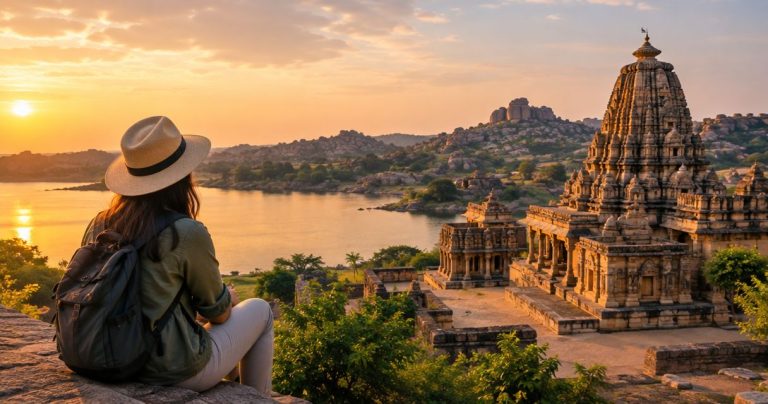
Best overall: the Taj Mahal. Best for an archaeological landscape: Hampi. Best for a short city visit: the Qutb Minar complex. This guide ranks the best heritage sites in India for a 2026 trip from New Zealand, with practical advice on UNESCO landmarks, walking demands and route planning.
- The Taj Mahal leads the best heritage sites in India for a first visit.
- Choose Hampi for an archaeological landscape, Ellora for rock-cut architecture, and Jaipur for living heritage.
- Ajanta suits painting-focused travellers; Mahabalipuram suits a coastal itinerary; Qutb Minar suits a Delhi stop.
- Mann Travel Nz helps New Zealand travellers compare flights when planning an India heritage itinerary.
Why this matters
India’s UNESCO sites are not interchangeable stops. A painted cave, a working historic city and a sprawling ruined capital demand different amounts of walking, attention and travel between places.
Choose the heritage experience first, then build the route around it. Mann Travel Nz compares and books flights from New Zealand to Indian cities, so your arrival city belongs in the decision—not as an afterthought once you have selected scattered monuments.
What makes the best heritage sites in India?
These criteria favour a useful holiday choice rather than a checklist of famous names:
- Distinctive heritage: Each recommendation offers something identifiable, from Mughal architecture to Buddhist murals.
- Visit experience: The setting and surviving detail must reward time on the ground, not just a photograph.
- Route fit: A destination should make sense within your wider India itinerary.
- Physical demands: Stairs, exposed paths, uneven surfaces and dispersed monuments affect who enjoys the visit.
- Clear trade-offs: Crowds, conservation restrictions and travel between monuments belong in the decision.
UNESCO recognition establishes heritage significance; it does not mean every site offers the same access, facilities or visitor experience.
Best heritage sites at a glance
| Site | Best for | Standout feature | Key limitation |
|---|---|---|---|
| Taj Mahal, Agra | A first India heritage trip | Marble mausoleum and formal garden composition | Busy visitor experience and entry restrictions |
| Hampi | An archaeological landscape | Vijayanagara remains across a boulder-strewn setting | Dispersed monuments require transport planning |
| Ellora Caves | Rock-cut architecture | Buddhist, Hindu and Jain monuments | Steps and uneven ground |
| Jaipur City | Living urban heritage | Planned streets, bazaars and historic buildings | Traffic and an active city environment |
| Ajanta Caves | Historic Buddhist painting | Murals within rock-cut cave interiors | Dim interiors and conservation restrictions |
| Mahabalipuram | A coastal heritage itinerary | Pallava temples, reliefs and rock-cut monuments | Exposed outdoor areas |
| Qutb Minar complex, Delhi | A short city visit | Monumental minaret and surrounding remains | No visitor access up the minaret |
1. Taj Mahal: best heritage site for a first India visit
The Taj Mahal in Agra is a Mughal mausoleum whose architecture, gardens and river setting form a single composition. Its appeal extends beyond the familiar front-facing photograph: symmetry, marble detail and changing viewpoints reward a slower circuit.
Best for: Travellers choosing their first major Indian heritage landmark in 2026. Give the monument its own place in your itinerary rather than treating Agra as a rushed interruption between other cities.
Taj Mahal pros:
- A clear focal point for a first heritage itinerary.
- Architectural detail rewards close observation.
- Gardens and exterior viewpoints provide different perspectives.
Taj Mahal cons:
- Crowds affect the pace and atmosphere.
- Security and entry rules require advance checking.
Keep bags light and check the official visiting arrangements before travel. A guided explanation is useful if you want the building’s funerary purpose and decorative details to mean more than a photo stop.
Verdict: Buy Taj Mahal entry after confirming your Agra dates and visiting arrangements.
2. Hampi: best heritage site for an archaeological landscape
Hampi preserves the remains of the Vijayanagara capital within a landscape of granite boulders, temples and river scenery. Unlike a single enclosed monument, its meaning emerges as you move between religious, royal and everyday spaces.
Best for: Travellers who enjoy exploring a historic landscape rather than entering one headline building. Hampi deserves a dedicated stay, not a distant addition squeezed between unrelated destinations.
Hampi pros:
- Architecture and natural setting are closely connected.
- Different monument groups reveal different uses of the capital.
- Walking between viewpoints adds context to the ruins.
Hampi cons:
- Distances between monument groups need transport planning.
- Exposed paths and uneven ground demand suitable footwear.
Group nearby monuments together and leave room to stop. A plan that lists every structure without considering geography turns exploration into repeated journeys across the same area.
Verdict: Buy entry to ticketed monuments once your Hampi route is organised.
3. Ellora Caves: best heritage site for rock-cut architecture
Ellora brings Buddhist, Hindu and Jain rock-cut monuments together in one archaeological complex. UNESCO describes 34 caves, with the Kailasa temple providing a particularly striking example of architecture excavated from rock.
Best for: Travellers interested in how buildings and sculpture can be created through excavation. Ellora is the stronger choice when architectural form matters more to you than painted interiors.
Ellora Caves pros:
- Different religious traditions appear within the same complex.
- Excavated spaces make construction methods part of the experience.
- Sculpture and architecture reward detailed observation.
Ellora Caves cons:
- Steps and uneven surfaces complicate access.
- Trying to inspect every cave equally can become repetitive.
For a 2026 visit, choose your priorities before arrival. Start with the monuments that match your interests, then add others as your energy allows; the cave count is context, not a completion target.
Verdict: Buy Ellora entry if rock-cut architecture is your main interest.
4. Jaipur City: best heritage site for living urban history
Jaipur’s UNESCO-listed historic city combines planned streets, commercial activity and historic architecture. The experience is not confined to a protected monument: movement, trading streets and the relationship between buildings are part of what you are visiting.
Best for: Travellers who want heritage alongside an active city. Choose Jaipur when you want to understand urban planning as well as see individual landmarks.
Jaipur City pros:
- Historic streets remain part of daily urban life.
- City planning provides a different perspective from isolated monuments.
- Architecture and bazaars create varied sightseeing opportunities.
Jaipur City cons:
- Traffic and busy streets require patience.
- Entry arrangements differ between individual attractions.
Do not confuse the Jaipur City UNESCO property with every attraction promoted under the wider Jaipur destination. Decide which buildings you want to enter, then plan a street-level route that connects them sensibly.
Verdict: Buy individual attraction tickets after choosing your Jaipur walking route.
5. Ajanta Caves: best heritage site for Buddhist painting
Ajanta’s rock-cut Buddhist caves are especially important for their surviving paintings. UNESCO describes 30 caves, set within a curved escarpment, where interiors bring painting, sculpture and religious space together.
Best for: Travellers who prefer looking closely at artistic detail to moving quickly between major landmarks. Ajanta rewards patience, especially when your interest lies in narrative scenes and painted surfaces.
Ajanta Caves pros:
- Painting is central to the experience.
- Interiors connect visual art with religious architecture.
- The cliff setting gives the complex a distinctive form.
Ajanta Caves cons:
- Dim interiors require time for careful viewing.
- Conservation rules limit photography and visitor behaviour.
Follow the current photography instructions and let your eyes adjust before moving on. If you are planning both Ajanta and Ellora, give them separate attention: their artistic strengths differ, even though both are described as cave sites.
Verdict: Buy Ajanta entry if historic painting is a priority for your trip.
6. Mahabalipuram: best heritage site for a coastal itinerary
The Group of Monuments at Mahabalipuram combines Pallava-era temples, rock-cut spaces, sculpted reliefs and monolithic monuments. The Shore Temple provides the coastal association, but it is only part of the heritage experience.
Best for: Travellers building a Tamil Nadu itinerary who want architecture and coastal surroundings in the same destination. In 2026, choose Mahabalipuram for the monument group, not simply as a beach stop with a temple attached.
Mahabalipuram pros:
- Different forms of stone architecture can be compared.
- Open-air reliefs reward close inspection.
- The coastal setting gives the visit a distinct character.
Mahabalipuram cons:
- Outdoor monuments expose visitors to sun and weather.
- Seeing only the Shore Temple leaves out important context.
Plan your route across the monument group before setting off. Allow time for carved surfaces as well as whole-building views; the details explain why these places belong together.
Verdict: Buy entry for your selected monuments after checking the current ticket arrangements.
7. Qutb Minar complex: best heritage site for a Delhi stop
The Qutb Minar complex brings a monumental minaret together with mosque remains, gateways and other historic structures. UNESCO records the minaret’s height as 72.5 metres; the surrounding monuments explain why the visit should extend beyond looking upwards.
Best for: Travellers who want a focused heritage visit while staying in Delhi. It fits a city-based itinerary more naturally than adding another distant destination.
Qutb Minar complex pros:
- Several structures provide context within one complex.
- Carved stonework rewards close viewing.
- The minaret supplies a clear architectural focal point.
Qutb Minar complex cons:
- Visitors cannot climb the minaret.
- Outdoor walking still requires planning around weather.
Read the site interpretation and examine the surrounding remains. The strongest visit connects the structures rather than treating the complex as a backdrop for a single photograph.
Verdict: Buy Qutb complex entry for a focused Delhi heritage visit.
How to turn the shortlist into a workable itinerary
Keep your 2026 route organised around geography and interests. An arrival city is useful only if it supports the places you actually want to visit.
- Choose a region: Start with your main heritage destination and identify its wider setting.
- Match your interests: Decide whether architecture, painting, urban history or landscape matters most.
- Check access: Review walking surfaces, stairs, entry rules and transport between monuments.
- Confirm flights: Compare arrival and departure cities against the route, not just the headline airfare.

For a first northern itinerary, Delhi, Agra and Jaipur form a coherent starting point. Ajanta and Ellora belong in a Maharashtra-focused plan; Hampi and Mahabalipuram deserve routes that account for their separate locations rather than treating southern India as one sightseeing area.
Mann Travel Nz is best suited to New Zealand travellers planning flights alongside an India heritage itinerary. Bring your preferred destinations and departure city to the flight comparison, and keep sightseeing dates flexible until the transport plan works.
Plan your India flights
Compare flights from New Zealand around the heritage destinations you want to visit.
How the sites rank
The Taj Mahal leads on first-visit appeal; the remaining choices each serve a different purpose. This ranking weighs distinctive heritage, visitor experience, route fit and practical limitations—not a claim that every traveller should visit every site.
Heritage descriptions and the cave counts and minaret height follow UNESCO World Heritage Centre property descriptions. For 2026 travel planning, check current visitor arrangements separately: heritage significance does not establish opening hours, entry procedures or access conditions.
Which heritage site should you choose?
Choose the Taj Mahal if you are undecided and planning your first India heritage trip. Choose Hampi for landscape-scale exploration, Ellora for rock-cut architecture and Ajanta for painting.
Jaipur suits travellers who want a working historic city; Mahabalipuram suits a coastal Tamil Nadu route; Qutb Minar suits a Delhi stay. Mann Travel Nz can compare flights around your chosen itinerary, but the strongest plan starts with a clear decision about what you want to see.
FAQ
What’s the best heritage site in India for a first visit?
The Taj Mahal is the best starting choice for a first India heritage visit. Its architecture, gardens and setting make it a clear focal point for an Agra stay.
Is Ajanta better than Ellora?
Ajanta is the better choice for historic Buddhist painting; Ellora is the better choice for rock-cut architecture. Choose according to your interests rather than treating the sites as interchangeable.
Which UNESCO site should I visit while staying in Delhi?
Choose the Qutb Minar complex for a focused heritage visit in Delhi. The surrounding mosque remains, gateways and stonework provide context beyond the minaret itself.
Can I visit these heritage sites with children?
Plan a family visit around each site’s walking demands, weather exposure and access rules. Shorter sightseeing sessions and clear priorities are more useful than trying to inspect every monument.
Do I need a guide at India’s heritage sites?
A guide is useful when you want help interpreting architecture, religious imagery or historical context. Choose a guide whose explanation matches your interests, and confirm the arrangements before starting.
How do I plan India heritage travel from New Zealand?
Choose your main heritage region before comparing flights from New Zealand. Mann Travel Nz compares and books flights to Indian cities, helping you connect flight planning with your intended route.
Does UNESCO status mean a site has easy access?
UNESCO status does not guarantee step-free access or uniform visitor facilities. Check the specific site’s paths, stairs, transport arrangements and current entry rules before committing to a visit.
One last thing
At Ellora, the rock was not merely a building material brought to a construction site: excavation created the architectural space. That distinction changes what you notice.
Before taking a wide photograph, stop at a doorway, column or carved surface and consider what had to be removed to leave it standing. Choose one detail to understand properly at each destination, rather than collecting photographs you cannot explain.
Related guides
- Best hill stations in India to escape the summer heat
- Best beach destinations in India for a Kiwi winter getaway
- Best wildlife safari parks in India for NZ travellers
- Best family holiday destinations in India for Kiwi travellers

