
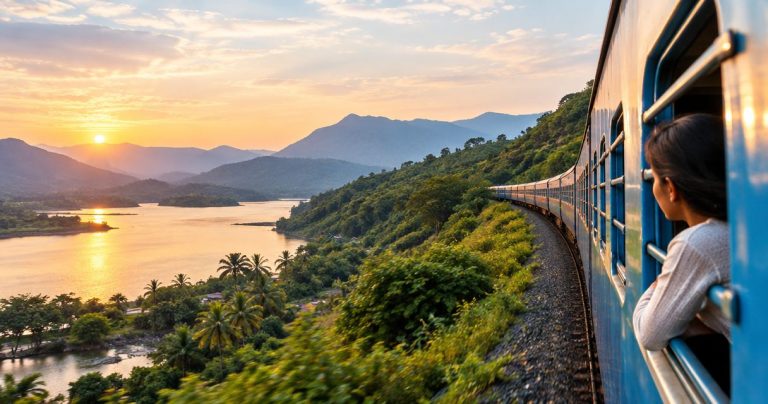
Best overall: Delhi–Agra for a straightforward first rail trip. Best for mountain scenery: Kalka–Shimla. Best for a coastal journey: Mumbai–Goa. The best train journeys in India for first-time visitors fit your itinerary without making the railway connection the hardest part of your 2026 holiday.
- Delhi–Agra leads the best train journeys in India for a straightforward first trip and access to Agra’s heritage sights.
- Choose Kalka–Shimla or the Nilgiri Mountain Railway when the train ride is part of the holiday.
- Mumbai–Goa suits a coastal itinerary; Delhi–Varanasi suits travellers comfortable with an overnight train.
- Mann Travel NZ suits New Zealand travellers arranging India flights around a rail itinerary.
Why this matters
A scenic railway and a useful intercity connection solve different problems. Delhi–Agra helps you reach a destination; Kalka–Shimla makes the journey itself a major activity. Choose between those purposes before comparing services.
For New Zealand travellers, the flight arrival and first train departure belong in the same plan. Mann Travel NZ compares and books flights to Indian cities and offers hotel bookings; plan your rail connections separately around those arrangements. Do not make a tightly timed train departure your first commitment after an international flight.
What makes the best train journey in India?
These criteria put practical first-time travel ahead of scenery alone:
- Itinerary fit: The route connects places you actually want to visit, without an unnecessary detour.
- Journey value: The railway offers useful transport, distinctive scenery or both.
- Booking clarity: You can identify the exact service, station, travel class and reservation status.
- Manageable transfers: Getting between your accommodation, station and next destination is straightforward.
- Comfort fit: The seating, sleeping arrangements and luggage space match your needs.
- Recovery options: A delay does not put your international departure or another essential booking at risk.
For a 2026 trip, compare actual dated services rather than assuming every train on a route offers the same experience. A route name describes the corridor, not a guarantee of particular seats, stops or timings.
Best train journeys in India at a glance
| Rank and journey | Best for | Standout feature | Key limitation |
|---|---|---|---|
| 1. Delhi–Agra | A straightforward first rail trip | Links Delhi with Agra’s major heritage sights | Station choice and onward road transfers need attention |
| 2. Kalka–Shimla | A mountain railway experience | Narrow-gauge travel through the Himalayan foothills | Requires a connection at Kalka |
| 3. Mumbai–Goa | A coastal holiday itinerary | Konkan scenery along the journey | A long journey needs a suitable daylight schedule |
| 4. Nilgiri Mountain Railway | A distinctive hill railway | Rack-assisted climbing between Mettupalayam and Coonoor | Does not replace your transfer to the foothills |
| 5. Darjeeling Himalayan Railway | A railway-focused hill stay | Small trains sharing a landscape of towns and hills | A short excursion and a full-route journey are different bookings |
| 6. Delhi–Varanasi | Combining rail travel with an overnight journey | Connects the capital with Varanasi | Overnight comfort depends on your booked class and berth |
1. Delhi–Agra: best for a straightforward first rail trip
Delhi–Agra is the default choice if you want to try Indian rail travel without building your holiday around a mountain railway. The route connects the capital with Agra, where the Taj Mahal and Agra Fort give the journey a clear purpose.
Choose your departure and arrival stations before arranging road transport. Delhi has several railway stations, and Agra’s station names are not interchangeable. Check the station printed on the ticket, not simply the city shown in your itinerary.
Delhi–Agra pros:
- Works as part of a Delhi-and-Agra sightseeing itinerary.
- Lets you start with seated daytime travel rather than a sleeper.
- Offers a clear destination beyond the railway experience.
Delhi–Agra cons:
- The journey is not the strongest choice for mountain or coastal scenery.
- Sightseeing still requires onward transport from the station.
Best for: First-time visitors who want a practical introduction to Indian trains.
Leave enough time in Agra to enjoy the destination rather than treating the station arrival as the end of the trip. Buy: Choose Delhi–Agra when straightforward transport matters more than a scenic railway experience.
2. Kalka–Shimla: best for mountain scenery
The Kalka–Shimla Railway climbs through the Himalayan foothills towards Shimla. Its small trains, curves and hillside setting make it a journey to schedule as an activity, not merely a transfer.
UNESCO’s Mountain Railways of India listing includes the Kalka–Shimla Railway. Its 762 mm gauge distinguishes it from the broad-gauge trains used on much of India’s intercity network; the smaller railway is part of the appeal, but also a reason to think carefully about luggage.
Kalka–Shimla pros:
- Makes the approach to Shimla part of your sightseeing.
- Suits travellers interested in railway engineering and hill landscapes.
- Pairs naturally with a stay in Shimla.
Kalka–Shimla cons:
- Requires you to reach Kalka and manage the connection.
- Is a poor choice when your priority is the quickest arrival.
Best for: Travellers who want the train ride to be a highlight of a hill holiday.
Use the guide to India’s hill stations to decide whether Shimla fits your wider itinerary. Buy: Choose Kalka–Shimla for the railway experience, not as a shortcut.
3. Mumbai–Goa: best for a coastal holiday itinerary
Mumbai–Goa suits travellers who want their rail journey to connect a city stay with a beach break. Services using the Konkan Railway pass through a landscape of hills, rivers, bridges and tunnels along India’s western side.
Daylight matters here. Compare the departure and arrival times of your chosen service so the part of the journey you want to see does not pass in darkness. Also check the Goa station against your accommodation; a ticket to Goa does not settle the final road transfer.
Mumbai–Goa pros:
- Combines useful intercity travel with changing scenery.
- Connects naturally with a Mumbai-and-Goa holiday.
- Offers an alternative to treating the transfer as an airport journey.
Mumbai–Goa cons:
- Takes a substantial part of your travel day or night.
- Arrival station choice affects your onward road journey.
Best for: Travellers who have time for an overland journey between Mumbai and Goa.
Treat dramatic wet-season scenery and reliable sightseeing weather as separate considerations. Check current weather and operating notices before travelling. Buy: Choose Mumbai–Goa when the journey deserves space in your holiday schedule.
4. Nilgiri Mountain Railway: best for a distinctive hill railway
The Nilgiri Mountain Railway links Mettupalayam with Udhagamandalam, commonly called Ooty, through Coonoor. The climb between Mettupalayam and Coonoor uses a rack system that helps trains negotiate the steep railway.
This UNESCO-listed railway runs on 1,000 mm gauge track. Choose your section deliberately: the lower climb and the upper journey towards Ooty are not identical experiences, even though both belong to the same railway.
Nilgiri Mountain Railway pros:
- Combines hill scenery with distinctive railway engineering.
- Fits an itinerary that includes Coonoor or Ooty.
- Gives railway enthusiasts a reason to prioritise the journey itself.
Nilgiri Mountain Railway cons:
- Requires separate planning to reach Mettupalayam or another boarding point.
- A shorter section does not reproduce the full route’s experience.
Best for: Travellers already visiting southern India who want a railway-led hill excursion.
Avoid adding a major cross-country detour solely because the railway looks appealing in photographs. Buy: Choose the Nilgiri Mountain Railway when Ooty or Coonoor already makes sense within your itinerary.
5. Darjeeling Himalayan Railway: best for a railway-focused hill stay
The Darjeeling Himalayan Railway is known for its small trains and close relationship with the surrounding streets and hills. A Darjeeling-based excursion is a different proposition from travelling along the longer route from the plains.
The UNESCO-listed railway uses 610 mm gauge track. Before booking, establish the exact boarding point, destination and excursion type; the phrase toy train does not identify one single service.
Darjeeling Himalayan Railway pros:
- Adds a distinctive railway activity to a Darjeeling stay.
- Suits travellers interested in historic railways.
- Makes the relationship between railway, town and hillside part of the experience.
Darjeeling Himalayan Railway cons:
- A short excursion does not provide the full-route journey.
- You still need a plan for reaching and leaving the Darjeeling area.
Best for: Visitors who want to include a heritage railway within a longer Darjeeling stay.
Check the traction and itinerary stated for the actual service rather than assuming every departure matches a familiar photograph. Buy: Choose a clearly identified excursion that fits your stay, not an unspecified toy-train booking.
6. Delhi–Varanasi: best for an overnight rail experience
Delhi–Varanasi suits travellers who want to connect the capital with Varanasi and are comfortable making a train part of their overnight accommodation plan. Select an overnight service deliberately; the route also has daytime services, so the city pair alone does not define the experience.
Your booked class and berth matter more than a general description of sleeper travel. Check whether you have a confirmed reservation, understand the sleeping arrangement and plan how you will reach your accommodation after arrival.
Delhi–Varanasi pros:
- Connects two destinations with different sightseeing priorities.
- Makes overnight rail travel part of the itinerary.
- Suits travellers who prefer an overland connection.
Delhi–Varanasi cons:
- Shared sleeping arrangements do not suit everyone.
- Poor sleep or a delay can affect your first day in Varanasi.
Best for: Travellers comfortable with shared overnight transport and a flexible arrival day.
Keep the morning after arrival light rather than committing immediately to a demanding sightseeing programme. Hold: Skip the overnight option if sleep quality is essential; compare daytime rail and flight alternatives instead.
How to choose and book your journey
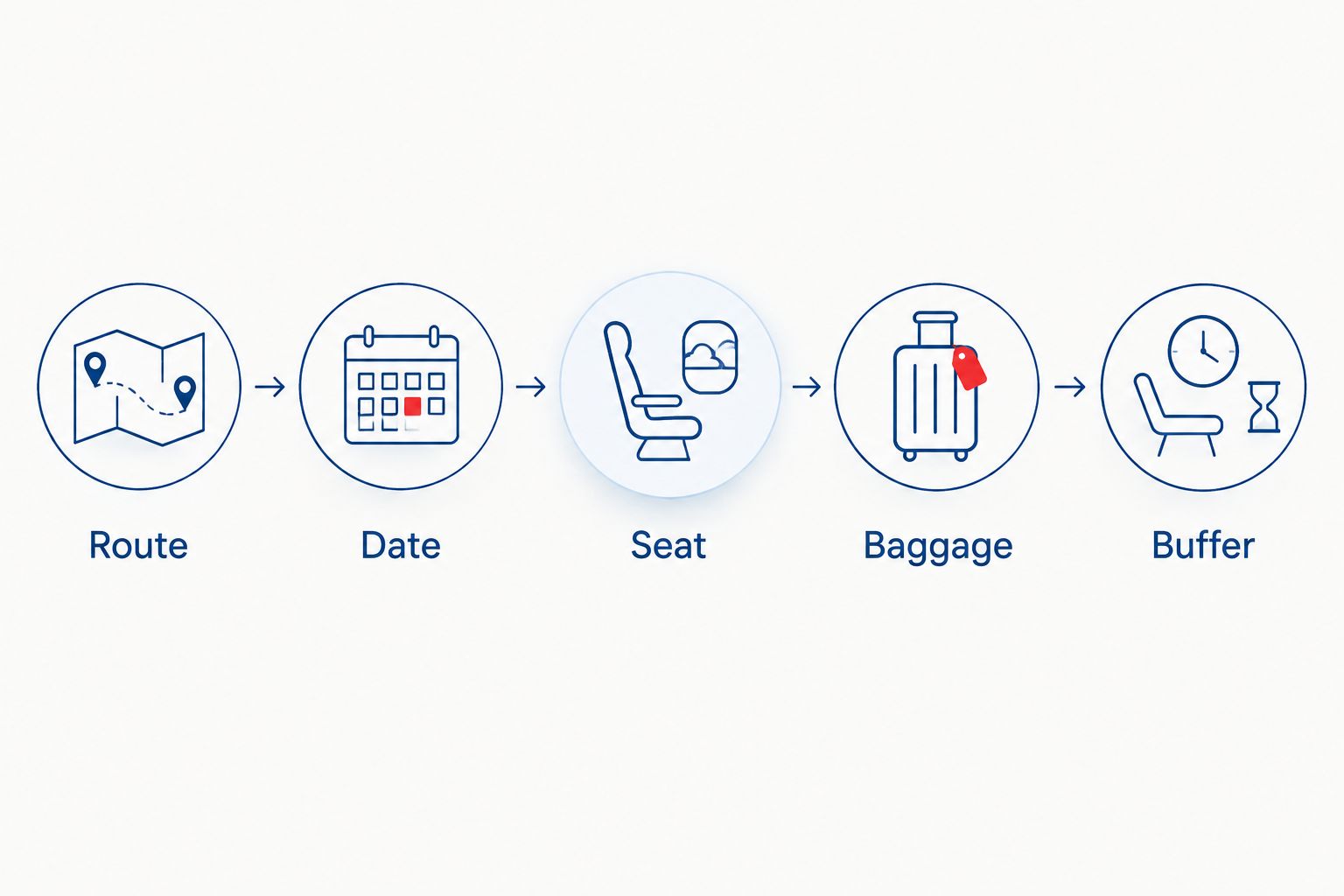
For 2026 travel, make the booking decision in this order. A scenic route is only a good recommendation when its actual service fits your dates and connections.
- Route: Choose the destination pair and confirm the exact boarding and arrival stations.
- Date: Check the service operating on your intended travel date, including current notices.
- Seat: Select the class, seat or berth arrangement you can comfortably use.
- Baggage: Plan how you will carry and manage your own luggage through stations and transfers.
- Buffer: Leave room between the train arrival and any essential onward departure.
The sequence prevents a common planning mistake: choosing a famous train first, then forcing the rest of the holiday around it. Start with where you need to go.
Before paying, check the reservation status and cancellation conditions attached to the actual booking. A waitlisted ticket is not the same as a confirmed seat or berth; do not build an essential connection around an assumption that it will clear.
Save your booking details where you can access them without relying entirely on mobile reception. Keep the passenger details consistent with the identification required for your journey, and confirm arrangements for children or travellers who need assistance before committing.
Match the rail trip to your New Zealand flights
Place long-distance rail journeys earlier in the itinerary rather than immediately before your flight home. For a 2026 booking enquiry, give Mann Travel NZ your intended Indian arrival city, return departure city and planned rail destinations so the flight discussion reflects the whole trip.
Plan your India flights
Compare India flights around your planned rail destinations and hotel stays.
How these journeys were ranked
Delhi–Agra ranks first because it gives a first-time visitor a clear transport task and a strong destination. The mountain railways rank for the experience itself; Mumbai–Goa and Delhi–Varanasi earn their places by connecting distinct holiday stops.
This is a route-selection guide, not a claim that every service on a route has identical comfort or reliability. The criteria favour itinerary fit, manageable transfers and a clear reason to take the train.
Which train journey should you choose?
Choose Delhi–Agra if you are undecided. It introduces rail travel without requiring you to plan an entire hill holiday around the railway.
Choose Kalka–Shimla when scenery is the main reason for travelling by train, and Mumbai–Goa when the route connects places already on your list. For 2026 planning, Mann Travel NZ is best for New Zealand travellers arranging India flights around a rail itinerary; select and verify the rail service separately.
FAQ
What’s the best train journey in India for a first-time visitor?
Delhi–Agra is the best default choice for a straightforward first rail trip. It connects Delhi with Agra’s heritage sights without requiring a specialist railway itinerary.
Is Kalka–Shimla better than the Darjeeling Himalayan Railway?
Kalka–Shimla is the better fit for a Shimla-bound mountain journey; the Darjeeling Himalayan Railway suits a Darjeeling-focused stay. Choose the destination first, then compare the exact railway services.
Which India train journey is best for coastal scenery?
Mumbai–Goa is the coastal choice in this guide. Select a service with suitable daylight timings and check which Goa station works for your accommodation.
Should I book an overnight train on my first India trip?
Book an overnight train only if shared sleeping arrangements suit you. For Delhi–Varanasi, check your class, berth and reservation status, and keep the arrival day flexible.
Can I take a mountain railway straight after landing in India?
Do not plan a tight mountain railway connection immediately after an international arrival. Kalka, Mettupalayam and the Darjeeling area require their own transfer planning.
How much do these Indian train journeys cost?
The fare depends on the dated service, class and journey section you select. Check the current fare and cancellation conditions during booking rather than relying on a general route estimate.
What should I check before booking India trains in 2026?
Check the exact stations, travel date, service, class and reservation status. Then confirm luggage arrangements, onward transfers and enough time before any essential flight connection.
One last thing
A famous railway name does not identify your booking. On the mountain routes especially, a short excursion, a partial journey and a longer route can produce very different days. Write down the boarding station, destination and service before you decide whether the experience matches what you came to see.
Related guides
- India’s heritage and UNESCO sites worth visiting
- Beach destinations in India for a Kiwi winter getaway
- Spiritual and pilgrimage destinations in India

