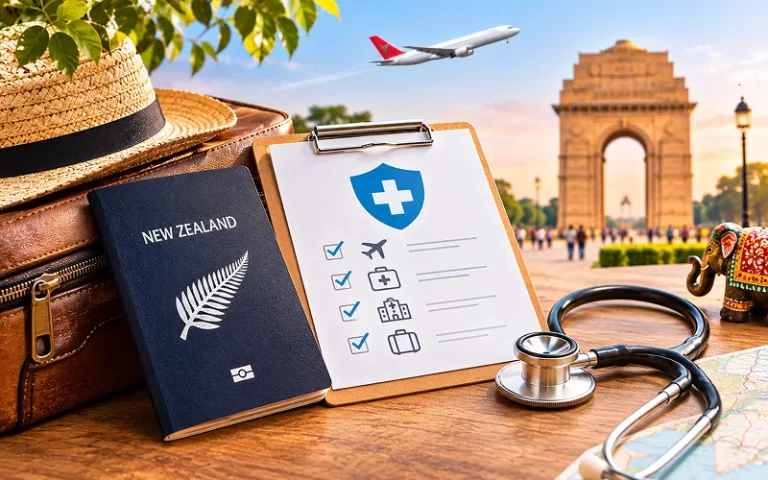
Travel insurance is often treated as a single purchase, something you arrange while booking flights and then forget about until you need it. However, there are three important stages to consider: before you fly, while you are in India and after you return home.
Understanding what your policy covers, how to get help during an emergency and what documents you need for a claim can make a real difference. Travel insurance for India deserves particular attention because medical treatment, evacuation arrangements and policy conditions may work differently from what New Zealand travellers are used to.
Here’s what to check before travelling and how to prepare for each stage of your trip.
Before You Fly: What Your Travel Insurance Policy Should Cover
New Zealand’s Ministry of Foreign Affairs and Trade advises travellers visiting India to arrange comprehensive travel insurance that includes medical evacuation by air. This is an important consideration when comparing travel insurance options because a basic policy may not provide all the protection you need.
Before purchasing a policy, check its maximum trip duration and make sure it covers your entire stay, including any stopovers. If anyone travelling has a pre-existing medical condition, disclose it accurately and ask the insurer whether additional cover is required. Never assume a condition is covered simply because it is controlled with medication or has not caused recent problems.
It is also worth comparing cancellation cover, baggage protection and travel disruption benefits. Medical evacuation is important, but it isn’t the only feature that can affect your travel experience.
What to Compare Before Buying Travel Insurance for India
Not every policy provides the same level of protection. Before choosing one, compare the following features carefully:
- Emergency medical expenses: Check the maximum amount available for hospital treatment, medical consultations and emergency care.
- Medical evacuation and repatriation: Confirm that the policy includes emergency medical evacuation by air and understand the conditions that apply.
- Pre-existing medical conditions: Check whether existing conditions are covered automatically, require additional cover or are excluded.
- Maximum trip duration: Make sure the policy covers the full length of your visit to India.
- Cancellation and travel disruption: Review what happens if you need to cancel, delay or change your travel plans for a covered reason.
- Baggage and personal belongings: Compare the limits for lost, stolen or damaged luggage and valuable items.
- Excess payable: Check how much you may need to pay yourself when making a claim.
- Activities and exclusions: Read the policy wording to understand which activities, situations and expenses are not covered.
Taking time to compare these details can help you choose a policy that suits your destination, travel dates and personal circumstances.
During the Trip: When Your Policy Actually Gets Tested
Having travel insurance is important, but knowing how to use it matters just as much.
If you need medical treatment in India, contact your insurer’s emergency assistance team as soon as possible. Depending on the hospital and policy, you may need to pay upfront and claim reimbursement later. For larger medical expenses, the insurer may be able to coordinate directly with the hospital or arrange a guarantee of payment.
Look for a policy with 24-hour emergency assistance and check whether its provider can coordinate with hospitals or arrange direct payment for eligible treatment. Confirm the process before travelling so you know whom to contact in an emergency.
Keep receipts and medical documents relevant to any potential claim. These may include consultation records, prescriptions, hospital bills and payment confirmations. If you require significant treatment, contact the insurer promptly and check whether expenses need to be approved before proceeding.
A little organisation during the trip can make the claims process easier once you return to New Zealand.
The Claims Process Nobody Reads About
Travel insurance claims can be delayed or declined for several reasons, including missing supporting documents, failure to follow policy requirements, late notification or exclusions relating to pre-existing medical conditions. The exact requirements vary between insurers, so understanding the claims process before departure can save time and frustration later.
If you receive medical treatment in India, ask the hospital or healthcare provider for documents that clearly explain the treatment and expenses. Depending on your insurer’s requirements, useful records may include:
- Medical reports and diagnosis details.
- Hospital admission and discharge summaries.
- Itemised bills and payment receipts.
- Prescriptions and pharmacy receipts.
- Any incident or police reports where relevant.
Check with your insurer whether it accepts digital copies or requires original documents. Keep copies of important paperwork and submit your claim within the timeframe stated in your policy.
It is also important to notify the insurer as soon as possible when a serious incident occurs. Some policies require approval before certain medical expenses or arrangements are made.
Understanding the Three Stages of Travel Insurance
Travel insurance involves more than choosing a policy before departure. The following table summarises what matters at each stage.
Trip stage | What matters most | Common mistake |
Before flying | Medical evacuation cover, trip duration and pre-existing condition disclosure | Buying a policy without checking exclusions and limits |
During the trip | Emergency assistance, insurer notification and supporting documents | Paying large medical expenses without contacting the insurer |
After returning | Submitting the claim with complete supporting evidence | Missing deadlines or providing incomplete documentation |
Keeping these three stages in mind can help you prepare before departure, respond appropriately if something happens and understand what is required when making a claim.
Why Overseas Travel Insurance Needs a Second Look for This Route
New Zealand has reciprocal healthcare agreements with Australia and the United Kingdom, allowing eligible travellers access to certain publicly funded medical services under specific conditions. There is no equivalent agreement with India.
New Zealand travellers should therefore arrange comprehensive travel insurance before visiting India, including cover for medical treatment and evacuation by air.
The important distinction is not whether a policy is labelled as an India-specific product, but whether its coverage, exclusions, medical limits and evacuation provisions suit your destination and travel plans.
When comparing India travel insurance NZ options, read the policy wording carefully rather than choosing solely on price or the headline coverage amount.
The Numbers Behind the Risk
The 2023 New Zealand Census recorded 292,092 people identifying with Indian ethnicity, making it the country’s third-largest ethnic group. This represented an increase of approximately 22% since 2018.
For many people in this community, visiting family in India is an important reason to travel. Understanding medical cover, evacuation provisions and claims requirements is particularly important when planning an overseas family visit.
Whether you are visiting relatives for a few weeks or planning a longer stay, choosing suitable travel insurance can help you prepare for unexpected situations.
Getting All Three Stages Right, Not Just the First
Choosing suitable travel insurance is an important part of preparing for a trip to India. Before purchasing a policy, compare the medical coverage, evacuation provisions, trip-duration limits and exclusions.
Keep the insurer’s emergency contact details accessible while travelling, and retain relevant receipts and medical documents in case you need to make a claim.
Mann Travel encourages travellers to consider these details alongside their flight arrangements so they can prepare for their journey with greater confidence. Taking time to understand your policy before departure is much easier than trying to work out the conditions during an emergency.
Travel insurance for India involves three important considerations: choosing suitable cover, knowing what to do if something happens during the trip and understanding how to submit a claim afterwards. Preparing for all three can help you travel with greater confidence.
frequently asked questions
Is travel insurance for India really necessary for a family visit, not just tourism?
Yes. The purpose of your visit does not change the importance of having suitable medical and evacuation cover. Whether you are visiting relatives, attending a wedding or travelling for tourism, unexpected medical expenses can arise. Check that your policy provides appropriate protection for your entire stay.
What should India travel insurance NZ actually include?
Look for emergency medical expenses, medical evacuation by air, cover for eligible pre-existing conditions and a trip-duration limit that matches your visit. It is also worth comparing cancellation cover, baggage protection, personal liability, travel disruption and the excess payable when making a claim.
What can cause a travel insurance claim to be declined?
Claims may be declined if the incident falls outside the policy’s coverage, an exclusion applies, required information was not disclosed, or the traveller cannot provide the necessary supporting documents. Always check your policy wording and contact the insurer promptly if something happens during your trip.
Does overseas travel insurance automatically cover a long stay with family?
Not always. Trip-duration limits vary between insurers and policies. Before purchasing cover, check the maximum permitted trip length and confirm that it includes your full visit, including any stopovers. You may need a policy extension or a different type of cover for a longer stay.
What's the one habit that makes claims easier later?
Keep relevant receipts, medical reports, prescriptions, hospital bills and other supporting documents throughout your trip. Contact your insurer promptly if you need treatment and check which documents are required. Keeping records as you go is easier than trying to collect them after returning home.
Does travel insurance cover medical evacuation from India to New Zealand?
It depends on the policy. Check that your cover includes emergency medical evacuation by air and understand the circumstances, limits and conditions under which evacuation is covered. New Zealand’s SafeTravel advice specifically recommends this provision for travellers visiting India.